Over the past decade, New Delhi’s demographic landscape has undergone a profound transformation. What was once a straightforward magnet for internal migration has evolved into a complex ecosystem of inflows, outflows, and short-term stays making it into a “revolving door” city.
As a relocation company that manages thousands of moves each year within the NCR and across international borders, E-Movers had a front-row seat to this shift. The idea of moving to Delhi as the pinnacle of a domestic career or a prestigious foreign posting no longer tells the full story. Today, Delhi simultaneously attracts ambitious new talent while quietly pushing out long-term residents driven by environmental and lifestyle concerns.
The Domestic Shift: From Survival to Quality of Life
Historically, migration into Delhi was largely shaped by distress migration. Workers from neighboring states such as Uttar Pradesh and Bihar arrived in search of employment in construction, manufacturing, and informal sectors. This trend continues, but it is no longer the dominant narrative.
The Rise of Skilled Migration
Over the last ten years, Delhi’s transition into a service and technology-driven economy has drawn a new cohort of migrants. Young professionals in IT, fintech, consulting, digital media, and start-ups continue to see the NCR as a launchpad for career growth, particularly in hubs like Gurgaon and Noida.
The Quiet Exodus
More striking, however, is the rise in out-migration. For the first time, we are seeing a sustained movement of middle-class families, retirees, and senior professionals leaving Delhi, not because of a lack of opportunity, but because of declining livability.
Cities such as Bengaluru, Pune, Dehradun, Goa, and even smaller tier-2 towns are emerging as preferred alternatives. Air quality, congestion, healthcare concerns, and the rising cost of living are the primary push factors. Recent estimates from 2024–2025 indicate that nearly 40% of Delhi residents have considered leaving, with around 15% having already relocated permanently in search of cleaner air and better quality of life. These are often described as “pollution refugees.”
The Foreign Perspective: From “Hardship Post” to Strategic Hub
Who Is Moving In
A decade ago, expatriates in Delhi were largely diplomats, defense personnel, or oil-and-gas executives. Today, the expat profile is far more diverse. We see foreign entrepreneurs, consultants, renewable energy specialists, policy advisors, and digital nomads choosing the NCR.
For multinational corporations, Delhi remains the regulatory and political gateway to India. Professionals from Japan, South Korea, and Europe are increasingly based in Gurgaon and South Delhi, leading projects in manufacturing, clean energy, infrastructure, and social development.
Who Is Moving Out
At the same time, expat tenure is shrinking. Long-term five-year assignments are being replaced by short-term postings of two to three years. The primary reason is consistent: environmental stress, particularly the winter smog.
Foreign professionals, especially those with young children, are more likely to decline postings outright or request early transfers. For many global firms, Delhi is now viewed as a strategic but challenging location, rather than a long-term base.
The Three Key Drivers Reshaping Migration
Across domestic and international movements, three forces stand out:
-
-
Environmental Quality: The Great Push
Severe PM2.5 levels during winter months have become a deal-breaker. Skilled professionals, who have the greatest mobility, are often the first to leave raising concerns about a gradual brain drain to cleaner cities.
-
Hub-and-Spoke Growth Within the NCR
Migration today is no longer just into Delhi, it’s within the NCR. Gurgaon and Noida are no longer suburbs; they are fully formed economic centers. We increasingly see residents moving out of central Delhi into planned satellite cities offering better infrastructure, gated communities, and modern amenities.
-
Remote Work and Digital Nomadism
Post-pandemic work models have untethered many high-income professionals from physical offices. Many now retain Delhi-based roles while living in ecologically healthier regions, traveling back only when necessary.
-
The Rise of Organized Relocation
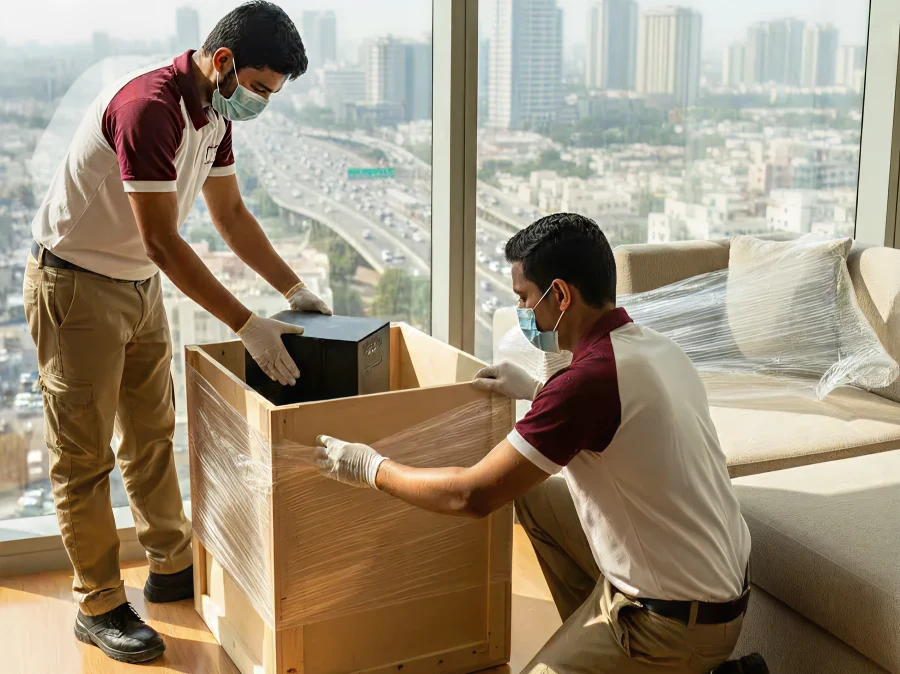
As these patterns accelerate, another trend has become clear: residents are moving away from “DIY” relocations. Modern moves often involve high-end modular furniture, luxury appliances, pets, and strict housing society regulations.
In such an environment, risk management, technical expertise, and professional handling are no longer optional. Organized relocation services are increasingly seen as essential instead of a convenientfor a successful transition.
Conclusion: Opportunity vs. Habitability
New Delhi remains a city of immense opportunities. It continues to attract those seeking economic advancement, professional exposure, and access to power corridors. Yet, it is steadily losing its established residents, the very people who contribute to its social continuity, civic engagement, and cultural fabric.
Delhi’s future as a global city will depend not just on job creation, but on habitability. Without meaningful solutions to its environmental and infrastructure challenges, the capital risks becoming a city of transients that are valuable, productive, but temporary.
For Delhi to remain a place people choose to stay, not just pass through, quality of life must move to the center of urban planning and policy.